Quick heads-up before we dive in: this breakdown explores the character’s core themes and the show itself. Haven’t watched Sharp Objects yet? Brace yourself for an intense ride through pain, memory, and the search for self.
Who is Camille Preaker?
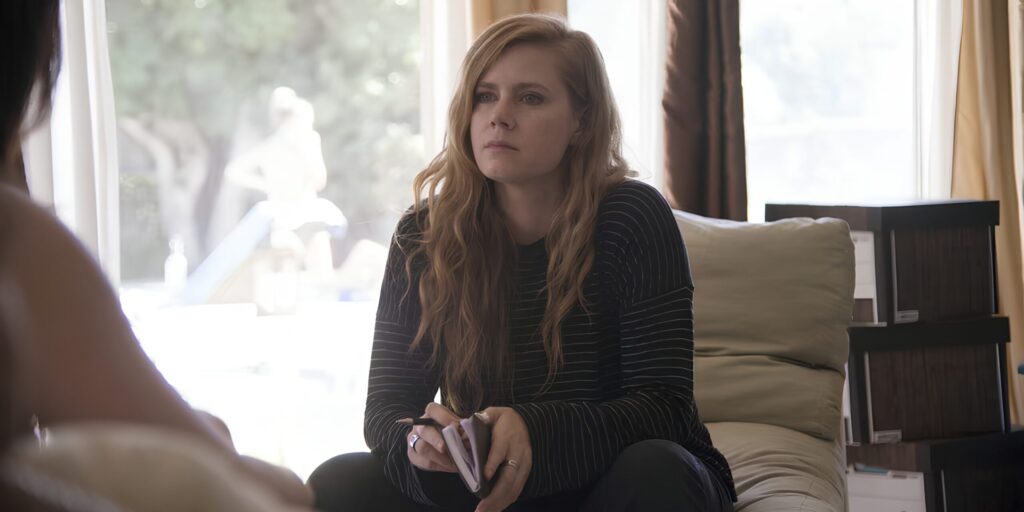
Camille works as a reporter for a St. Louis newspaper, sent back to her hometown of Wind Gap to cover the murders of two teenage girls. The trip forces her to confront a traumatic past, including her little sister’s death and a deeply troubled bond with her mother.
People often link her to borderline personality disorder because of her obvious emotional ups and downs, self-destructive coping habits, and constant battle with a shattered sense of self and deep inner emptiness.
A Past That Sticks to Her Skin
Camille’s childhood and teen years were shaped by an early devastating loss and zero emotional support. Her sister’s death left a family void that nothing could fill. Her mom, Adora, stayed cold and self-absorbed, never giving her the love or validation she craved. Even as a kid, emotions hit her like a freight train, a kind of pain too big for words.
To deal with it all, she turned pain into something physical and impulsive, carving her body like a roadmap of inner turmoil. Deep down, it felt like a desperate hunt for anything to fill that gnawing existential hole and give her suffering a name.
Borderline Traits You Can Spot in Camille
- Desperate efforts to avoid real or imagined abandonment: Somewhat. Camille pulls away from people, but her backstory hints at a buried fear of rejection. She distances herself first, maybe to control the hurt from abandonments she already saw coming in her family.
- Unstable, intense relationships with idealization and devaluation: Yes. Her connections follow a cycle of running away and shutting down. She swings between craving closeness and self-sabotage through isolation, making healthy bonds nearly impossible.
- Shaky sense of identity: Yes, and it’s central. Camille struggles hard to figure out who she is beyond the grieving sister and rejected daughter roles. Her self-image blurs amid traumatic memories and others’ expectations.
- Recurrent suicidal behavior, threats, or self-harm: Yes, front and center. Self-harm defines her: she uses it like a ritual to cope with unbearable feelings, etching words into her skin to turn mental agony physical.
- Chronic feelings of emptiness: Yes. A profound, ongoing void runs through her life. She tries filling it with investigative work, fleeting hookups, and darker self-destructive acts.
- Intense, hard-to-control anger: Partially. Her rage turns inward as self-destruction. Still, she has outbursts of raw irritability, especially when her past or family hits too close.
Does Camille Have Borderline or Not?
Out of the official nine criteria, Camille consistently displays at least four to five core borderline personality disorder traits: identity disturbance, repeated self-harm, chronic emptiness, relationship instability, plus milder signs of abandonment fears and anger issues.
That’s a strong match for the disorder’s pattern. Her pain, coping methods, and self-view echo what many diagnosed folks go through. That said, analyzing a fictional character isn’t diagnosing anyone. The show portrays borderline symptoms in raw detail, but a real professional would assess frequency, intensity, and life impact. Camille’s hurt feels genuine, and her arc mirrors real borderline patterns.
Beyond Borderline: Other Possibilities
Camille’s profile points to other issues too, often overlapping. Complex PTSD fits her childhood trauma perfectly. Major depression shows up in her deep despair episodes. Her self-harm rituals could tie into impulse control disorders. These conditions frequently coexist, making the suffering even tougher.
If You See Yourself in Camille Preaker
Spotting yourself in Camille’s fight, whether it’s the emotional intensity, emptiness, or hard-to-rein-in impulses? Know this: it doesn’t define your worth. Recognizing these patterns, even through a character, can be a big wake-up call. Her story is about facing past demons, and in real life, therapy provides real support for that path. Stability is within reach with the right help.
Lots of people relating to this find a welcoming, informative space following @myborderlineview on Instagram.
For a deeper dive blending personal experience and insight, the e-book My Borderline View makes a solid next step in your own understanding journey.
The Painful Truth Carved in Skin
Camille Preaker shows how pain can stay quiet but still leave scars. Her story makes it clear: borderline behaviors are desperate grabs to handle crushing inner turmoil. Seeing such a strong borderline match in a character urges us to examine our own stories more closely.
Getting professional help isn’t weakness, it’s the first step to rewriting your narrative, one where pain doesn’t have to become wounds.
Disclaimer: This piece offers an educational look at a fictional character, drawn from observable behaviors and public interpretations. It aims to clarify borderline personality disorder, help those who relate spot patterns, reflect safely, and seek qualified therapy. It’s not absolute truth, diagnosis, clinical assessment, or medical advice.
The End!