“Disclaimer: This article contains spoilers for major plot points and the series finale.”
Who is Diane Nguyen?
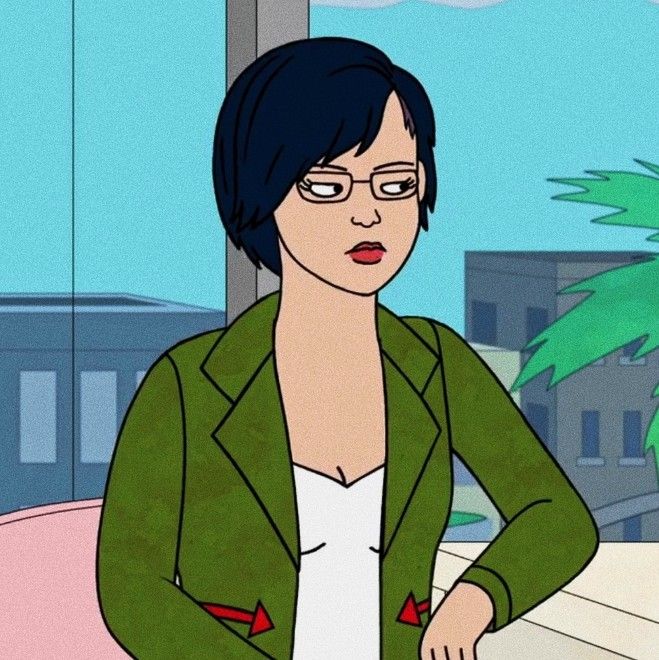
Diane’s a Vietnamese-American writer living in LA, introduced in the first episode of BoJack Horseman as the ghostwriter hired for the main character’s memoir. She rocks glasses, a laid-back style, and sharp smarts that make her the voice of reason most of the time. But under that put-together front, she’s carrying some heavy emotional baggage.
She grew up in Boston with a seriously messed-up family. Her parents and siblings treated her like the black sheep. Back home for her dad’s funeral in season one, they’d mock her and call her “Cry-ane” whenever she got upset. Her folks were neglectful and seemed to get a kick out of watching her struggle. That lack of support left scars that stick with her through the whole series.
Diane marries Mr. Peanutbutter, this upbeat, outgoing dog who’s her total opposite. Things start off great, but their differences start showing cracks that maybe they weren’t such a match after all. She also gets into this intense, messy friendship with BoJack, a deeply self-destructive guy she keeps trying to fix, even when it wrecks her own mental health.
Over the six seasons, we watch Diane wrestle with depression, anxiety attacks, a rough divorce, figuring out her Asian-American identity, and hunting for some real purpose in life. Fans and online forums often peg her behavior as borderline personality disorder (BPD), thanks to those wild emotional swings and her constant feeling of something missing.
Diane’s layers aren’t random. The writers built a character who’s anything but simple, full of deep traumas and clashing desires. She’s not one-note. Every rash move or anger outburst ties back to her backstory and the emotional mess shaped by her tough childhood. That’s the depth that gets you thinking about what’s really going on inside her.
What was Diane Nguyen’s background like?
Diane’s childhood was packed with emotional neglect and nonstop rejection. She grew up in a home where she didn’t belong, her feelings got laughed off, and she figured out early she couldn’t rely on anyone. Her parents didn’t just overlook her need for love, they almost seemed to enjoy her pain.
As a teen, she already had that raw emotional intensity that set her apart. She craved her family’s approval but got pushed away harder the more she tried. It carved out this emptiness she spent her life trying to fill, through relationships and her career.
She’d act on impulse whenever things hurt. Instead of facing issues, she’d bolt, hole up alone, or make huge calls like jetting off to another country without a second thought. That habit shows how tough it was for her to handle emotional pain.
Diane clung to this fantasy that someone would swoop in and fix her or fill that unnamed void. First with Mr. Peanutbutter, then chasing her roots in Vietnam, and in her complicated bond with BoJack. None of it truly helped though, since the root of it all was deeper.
Signs of BPD in Diane Nguyen
- Frenzied efforts to avoid real or imagined abandonment
Does it show up in Diane? Yep. She’s got this deep fear of being ditched and hangs onto relationships even when they’re toxic, terrified of ending up alone. - Unstable, intense relationships with idealization and devaluation
Does it show up in Diane? Totally. With Mr. Peanutbutter, she flips from seeing him as perfect hubby to picking him apart. Same with BoJack: one minute she’s set on saving him, the next she sees how toxic he is. - Shaky sense of self or identity disturbance
Does it show up in Diane? All the way. She spends the series lost on who she is, jumping projects, heading to Vietnam for roots, and finally admitting she doesn’t recognize her old self anymore. - Self-damaging impulsivity
Does it show up in Diane? Sure does. She makes snap choices like relocating with no plan, quitting jobs out of nowhere, or diving into stuff she knows will hurt her. - Emotional rollercoaster with rapid mood shifts
Does it show up in Diane? Big time. She bounces from super productive days to deep depressions where she can’t get out of bed, with moods flipping fast and fierce. - Intense, hard-to-control anger
Does it show up in Diane? Yes. She bottles up rage that bursts out in fights, grudges she can’t shake, and explosive reactions to frustrations or unfairness. - Chronic feelings of emptiness
Does it show up in Diane? Spot on. She carries this void nothing fills, not marriage or career wins, always chasing meaning for pain that won’t quit.
Does Diane Nguyen have BPD or just traits?
Out of the nine BPD criteria, Diane nails seven spot-on: fear of abandonment, rocky relationships, identity issues, reckless impulses, emotional ups and downs, explosive anger, and that lingering emptiness. It’s a strong match.
How often it happens matters too. These aren’t one-offs, they repeat across the series and mess up her shot at healthy bonds or a steady life. Her pain feels real in the story, helping explain her reactions.
That emotional weight keeps her from being flawless and makes her relatable. She’s not just another cartoon figure. She’s messy, full of contradictions, tough to pin down, like real folks. But keep in mind, this is all fan analysis in fiction land. Even with the fit, slapping a full diagnosis on her stays in the story’s realm, to better grasp her feelings and choices.
Diane Nguyen, caught between depression and anxiety
On top of BPD traits, Diane deals with clear depression and generalized anxiety symptoms. She has spells where she can’t leave bed, loses all drive, and feels wiped out. Anxiety hits as constant future worries, trouble chilling, and overthinking everything.
These often overlap. It’s not one or the other. Folks with BPD frequently battle depression and anxiety too. Diane’s case screams it in how she handles work, love, and self-identity.
At one point she starts antidepressants, and the show nails a real truth: fear of judgment nearly stops her from getting help. But once she pushes through and tries treatment, life gets noticeably better. Problems don’t vanish, but she gains tools to cope.
If you see yourself in Diane
If this rings true for your own life, hear me out: it doesn’t define you. Spotting these patterns, even in a TV character, can kickstart getting real help. Change is doable.
Solid info and support are on Instagram @myborderlineview. I share posts there that bust myths on BPD and prove you can build more stability.
For a deeper dive, check my e-book My Borderline View. It’s reflections from my own path and might spotlight options you haven’t considered.
If you haven’t watched BoJack Horseman yet
Give it a shot, especially watching Diane closely. Notice the over-the-top reactions, quiet moments loaded with feeling, efforts to reconnect with her heritage, blowups with Mr. Peanutbutter, the tangled friendship with BoJack. It’s all crafted to reveal way more than meets the eye.
The journey of someone who learns every pain can turn into growth
Diane’s arc shows intense emotions might signal something needing care, attention, a closer look. BPD is tricky, and signs often fly under the radar, even for those living it.
In the finale, she lands on a big realization. After years twisting traumas to justify her hurt, she sees maybe no grand explanation is needed. Looking back, she knows that old version is still her, despite all the change. Powerful reminder: we can carry the marks and keep moving forward.
With therapy and the right support, tons of people find lighter, fuller lives. Symptom relief happens. Diane found hers. You can find yours too.
The End!
Disclaimer: This is purely an educational breakdown of Diane Nguyen based on her on-screen behaviors. It aims to shed light on borderline personality disorder, help those who relate spot patterns, reflect safely, and seek qualified therapy. Nothing here is absolute truth, diagnosis, clinical eval, or medical advice.