Heads up: this article contains major spoilers from seasons 2 and 3 of You. If you have not watched it yet, reading this might actually help you decide whether the show is worth your time and give you a sharper eye for what you will find on screen. If you have already seen it, what comes next is going to hit different.
Who Is Love Quinn?
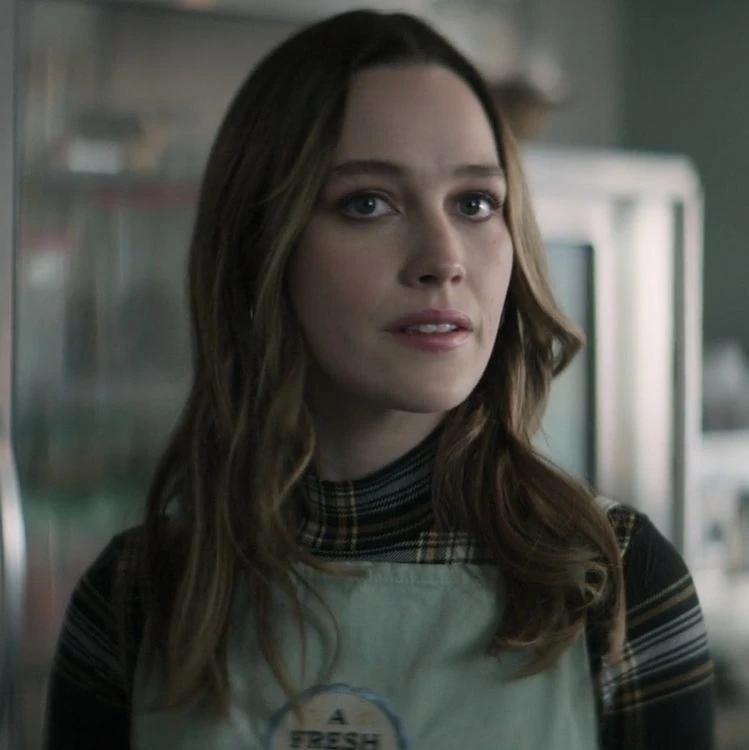
You is a psychological thriller series available on Netflix, based on the books by Caroline Kepnes. The story follows Joe Goldberg, a man who becomes obsessed with the women he idealizes and goes to extreme lengths, including violence, to hold onto those relationships. The series is narrated by Joe himself, which gives the whole story a very particular slant from the start.
Love Quinn shows up in season 2 as Joe‘s main love interest in Los Angeles. She is a chef, runs a wellness grocery store called Anavrin, and comes across as warm, protective of her twin brother Forty, and someone who connects with people in a way that feels real and disarming.
What the show gradually reveals is that Love carries her own story, one that started long before Joe came along, and it includes losses, secrets, and decisions made in moments of intense emotional overload. The show does not frame her as a one-sided character. She is complex, full of contradictions, and acts from a logic that makes complete sense given everything she has been through.
By season 3, Love and Joe are married and raising their son Henry in the California suburb of Madre Linda. Living together day in and day out brings both of their patterns to the surface in ways that are impossible to ignore. Love shifts between being a present and caring mother and partner, and having intense emotional reactions when she senses a threat to her relationship or the family she has built.
Throughout both seasons, her relationships with Joe, Forty, her mother Dottie, and the people who come in and out of her life reveal a very consistent pattern: a deep need for real connection, a genuine difficulty sitting with the possibility of loss, and reactions that often go well beyond what the situation called for in terms of intensity.
That pattern is exactly what led so many viewers to associate Love Quinn with Borderline Personality Disorder. The show does not hand you a simple character. It gives you a woman with a real history of pain and very specific relational patterns, and that is what makes this analysis worth having.
Characters like Love are not built to be read at face value. They carry trauma, conflicting desires, and behavioral layers that push back against easy judgment. That depth is what sparks genuine reflection, showing that every intense or seemingly erratic choice has roots in that person’s actual history.
What Was Love Quinn’s Past Like?
Love grew up in a financially comfortable but emotionally distant household. Her parents, Dottie and Ray Quinn, are shown as physically present but largely unavailable when it came to emotional support for her or her brother Forty. Dottie in particular comes across throughout the series as controlling and critical, someone who held her kids to a high standard while keeping them at arm’s length.
Love had a previous relationship with a man named James, someone she was deeply in love with who died young. The show makes it clear that she never really processed that loss in a healthy way, and the absence of James left a mark that shows up directly in how she relates to people during the seasons we follow her story.
There is also something from her past that she carried silently for years. When she was young, she stepped in to protect Forty from abuse by the family’s nanny. She held onto that alone, never having a real space to work through what she had lived through or the emotional weight of what she had done. That pattern of absorbing the full weight of extreme situations on her own shows up again and again throughout her story.
BPD Traits in Love Quinn
Among the 9 criteria in the DSM-5 for Borderline Personality Disorder, Love Quinn shows at least five of them consistently and observably across both seasons. Here is how each one shows up in the series:
· Intense efforts to avoid abandonment: Yes. A large part of Love‘s actions are shaped by the fear of losing the people she loves. When she senses Joe pulling away emotionally or turning his attention toward someone else, she does not wait or pull back. She acts, and she acts fast. This pattern shows up repeatedly and consistently across both seasons she is in.
· Unstable relationships with idealization and devaluation: Yes. Love idealizes Joe from the start with an intensity that overlooks clear evidence of who he actually is. Once reality starts breaking through, she cannot hold a balanced view of the relationship. One moment he is exactly what she has always needed, the next he is the source of all her pain. There is no middle ground visible anywhere in the series.
· Impulsivity with significant consequences: Yes. Love‘s most important decisions rarely go through any real weighing of consequences. She acts from whatever emotional state she is in at that moment, and those actions regularly land her in situations with no easy way out. This pattern repeats itself directly throughout both seasons.
· Intense and hard to control anger: Yes. Love‘s anger is one of the most consistent things about her throughout the show. She has a hard time responding proportionally to situations involving betrayal, rejection, or anything that feels like a threat. When something or someone gets between her and what she considers hers, the response is urgent and intense. It is not cold or calculated. It is visceral and immediate.
· Marked emotional instability: Yes. Love moves between very different emotional states at a speed that the people around her struggle to keep up with. In the same situation she can be fully present and warm, and then shift completely the moment something reads to her as rejection. That pattern gets in the way of every relationship she tries to build across the series.
So, Does Love Quinn Actually Have BPD or Are These Just Traits?
Love Quinn shows five criteria of Borderline Personality Disorder clearly and repeatedly across seasons 2 and 3 of You. That points to a high compatibility with the disorder. The impact of these patterns shows up in every part of her life: her romantic relationship, her role as a mother, her friendships, and the choices she makes under intense emotional pressure.
That said, this analysis lives in the space of interpreting a fictional work. Love is a character, and what the writers built is a dense portrayal of emotional and relational patterns that line up with what we know about BPD. It is not a diagnosis. It is a valid reading, one that helps make sense of why her choices follow their own logic even when they are hard to understand from the outside.
Love Quinn and What Else Might Be Going On
Love‘s behavior throughout the series does not come down to a single disorder. Beyond the high compatibility with Borderline Personality Disorder, she shows signs of other conditions that exist at the same time and feed into each other.
Post-Traumatic Stress Disorder is observably present. The death of James, the emotionally distant home she grew up in, the weight of carrying the nanny situation alone, and the accumulated losses throughout her life all left marks that show up in how she responds to stress and perceived threat.
There are also signs consistent with intermittent explosive disorder. This condition is characterized by episodes of intense anger that are out of proportion to what triggered them, come on suddenly, and result in behaviors the person cannot stop before they act. In Love, this is clear: she is not acting from cold planning. She reacts from an emotional trigger and moves before she has processed any of what might follow.
A lot of people watching Love‘s story immediately think of Antisocial Personality Disorder. That is understandable, but that disorder is defined by an absence of remorse, cold and calculated manipulation, and a systematic disregard for others without any real emotional bond involved. Joe is actually a much closer fit for that profile within the same show. He plans, he controls, he acts with a detachment that rarely shows real guilt.
Love functions very differently. She shows remorse, she feels the relational consequences of her actions, and she acts out of genuine emotional bonds, not in spite of them. That emotional weight being present is exactly what separates her from the antisocial profile and brings her closer to the pattern being analyzed here.
On top of that, the need for control over her environment and relationships, combined with a consistent difficulty recognizing other people’s boundaries, points to traits consistent with narcissistic personality disorder layered on top of the main picture. All of these conditions show up together in Love, and it is precisely that overlap that makes her such a dense and hard to categorize character.
When You Recognize Yourself in Love Before You Judge Her
If you watched You and felt something familiar in the way Love loves, in how much she fears losing people, in the intensity of her reaction when something threatens what she has built, that is not a coincidence and it is not a problem. Recognizing patterns in a fictional character can be the first step toward understanding what goes on inside you with more clarity and less self-judgment.
Borderline Personality Disorder does not define who you are or limit what you can build. Many people living with BPD reach a place of much greater stability, healthier relationships, and a relationship with their own emotions that is no longer so overwhelming. That is real and it is possible, and therapy is the most solid path to get there.
For anyone looking for a space where BPD is handled with honesty and without sugarcoating, there is content made specifically for that at @myborderlineview. The topics most people avoid get the attention they deserve over there.
And for anyone who wants to go deeper than what fits in a single post, the e-book My Borderline View brings a more in-depth look at the disorder, written by someone who knows what it is like to live with it. You can find the link in the bio.
If You Have Not Watched You Yet
You is a series that grabs you through its narrative perspective and through characters that push back against easy readings. Love Quinn is one of the main reasons to watch it closely. Knowing what you know now can make the experience a lot richer, because you will catch layers that would have slipped right past you otherwise. It is worth going in and drawing your own conclusions.
What Stays After the Screen Goes Dark
The story of Love Quinn in You shows that intense emotional and relational patterns almost always have a history behind them. Borderline Personality Disorder is complex, and many of its signs go unnoticed for years, including by the person living with it.
Understanding BPD clearly is what makes it possible to find the right kind of support. If any part of this analysis resonated with you, that is already something valuable to know about yourself. Real improvement is possible, and symptom remission is a path that many people reach through therapy and the right support system. It does not matter where you are starting from.
The End!
“Disclaimer: This article is strictly an educational analysis of a fictional character [Love Quinn, from the series You], based on observable behaviors within her story. The goal is to offer clarity about Borderline Personality Disorder, helping those who identify with this condition to recognize patterns, reflect with greater confidence, and seek therapy with a qualified professional. Nothing in this article should be read as absolute truth, nor does it constitute a diagnosis, clinical evaluation, or medical opinion.”